Doing Nothing For Now
A lot of the doors we look at in Spokane Valley aren't broken yet. They're just loud, slow to close, or the opener grinds for a second before it catches. Doing nothing isn't automatically wrong. If the door still seals, the opener still reverses on contact, and the only issue is cosmetic rust on the bottom panel, you can wait.
What changes that math here is the housing stock. Most of the service area was built between 1951 and 2008, with a median build year of 1978, and the bulk of it sits in the 1960s-70s band across the eleven named neighborhoods we work in. A door installed with a house from that run is now 45 to 65 years old if it was never replaced. Original hardware from that era - galvanized torsion springs rated for a lighter steel door, single-layer panels with no insulation - doesn't fail gracefully. It fails in the middle of a cold snap, usually on the coldest morning of the stretch, because that's when the steel is most brittle and the lift load is heaviest.
So doing nothing for now is fine right up until you're deciding whether to wait or not during a hard freeze with a dead spring. Know which situation you're in before you're in it.
What the Weather Here Does to It
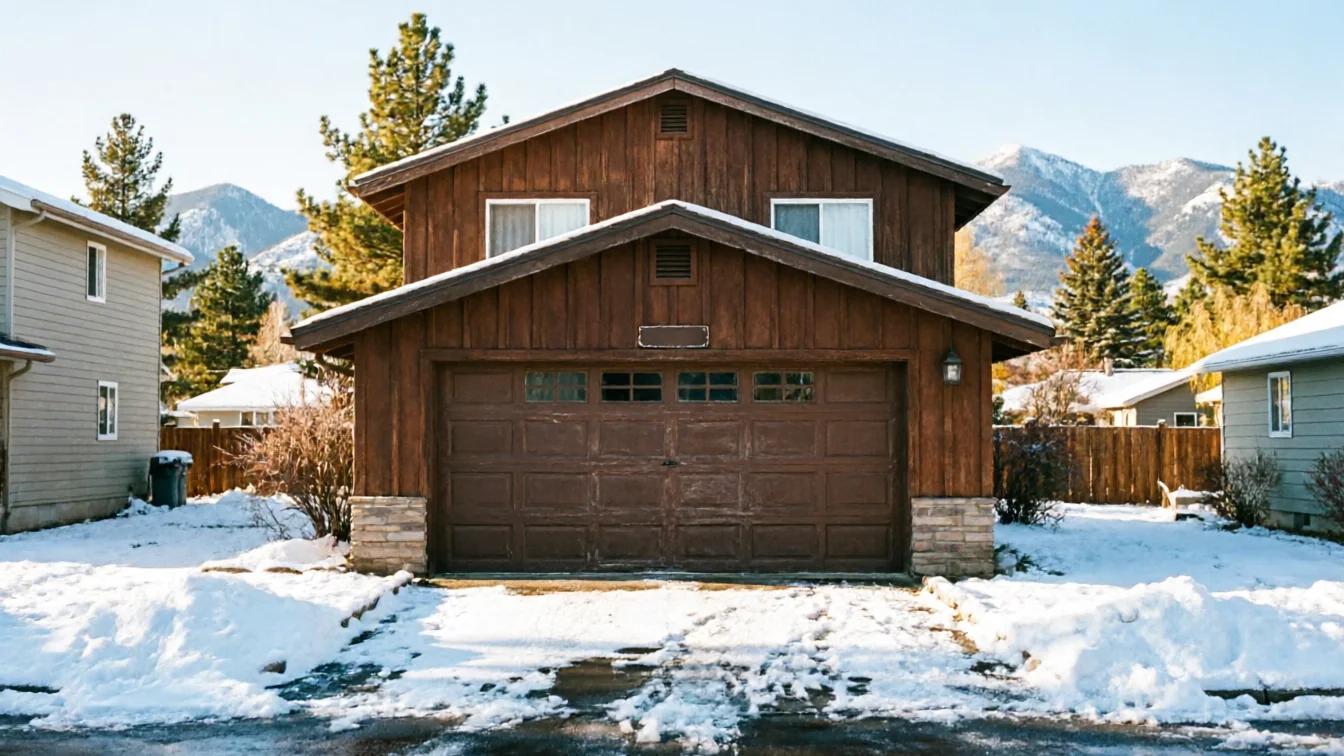
Spokane Valley sits in a cold, severe climate band, and that does specific things to an older garage door that a mild-climate town never deals with. Steel contracts in deep cold, and a torsion spring that's already fatigued from decades of cycles loses tension faster when it's cold-soaked overnight. That's why so many of our broken-spring calls cluster right after a cold front moves through, not during it.
The second thing cold does is to the weatherseal and the track lubrication. A door built in the 1960s or 70s almost never has a thermal break in the panel, so the steel itself gets cold enough to make the nylon rollers brittle and the old grease in the track stiff. You get a door that groans, hesitates, or stutters on the first open of the day - not because anything broke, but because everything got stiff overnight.
Slab doors from that era also flex more in a hard freeze-thaw cycle than anything built to current standards, and repeated flexing is what eventually cracks a weld or bends a track bracket. None of this means replace it on a schedule. It means a 50-year-old door in this climate is working harder than the same door would in a place that doesn't see hard winters, and the repair math should account for that.
What Is Going On
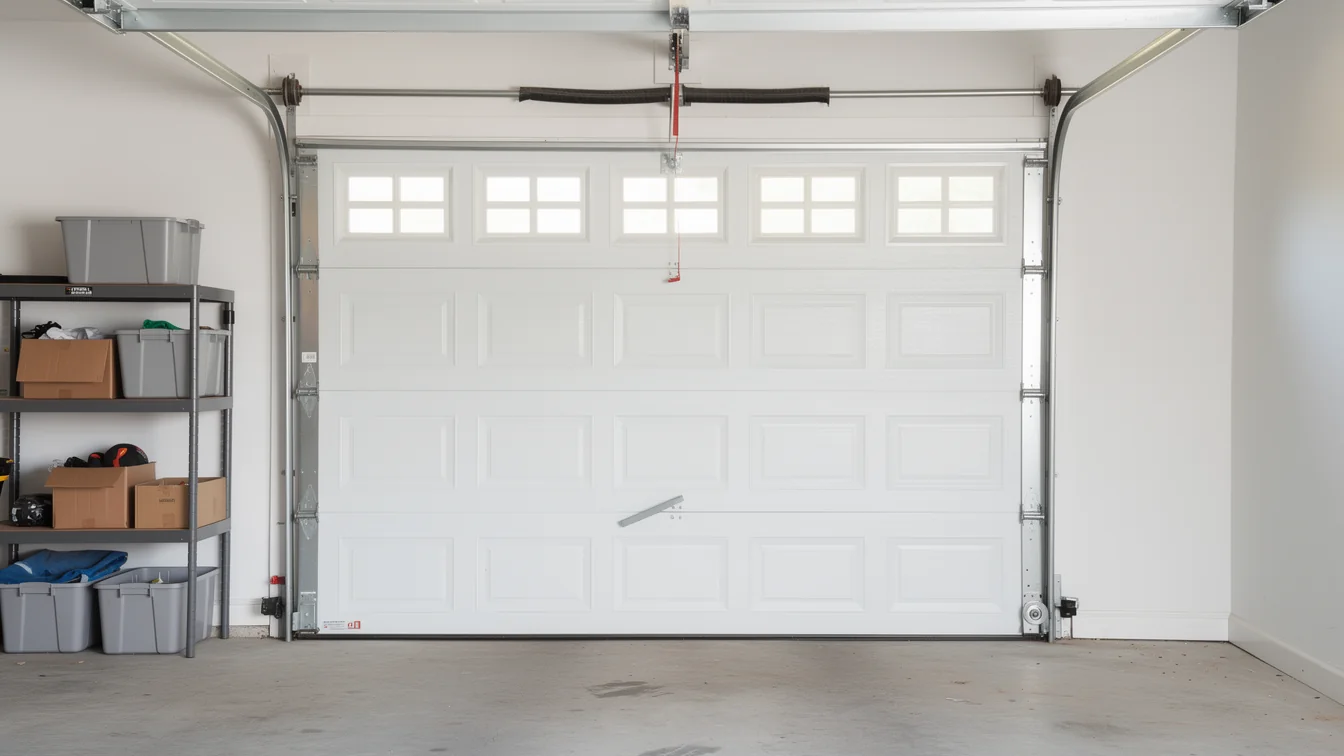
Before you decide to fix or replace, figure out what's actually failing. On the doors we see from the 1960s-70s stock common across Spokane Valley neighborhoods, there are three usual suspects: the torsion spring (snapped or just worn out), the rollers and track (bent, rusted, or just worn smooth), and the opener itself, which on a house built mid-century has often been swapped once already and is now its own aging unit.
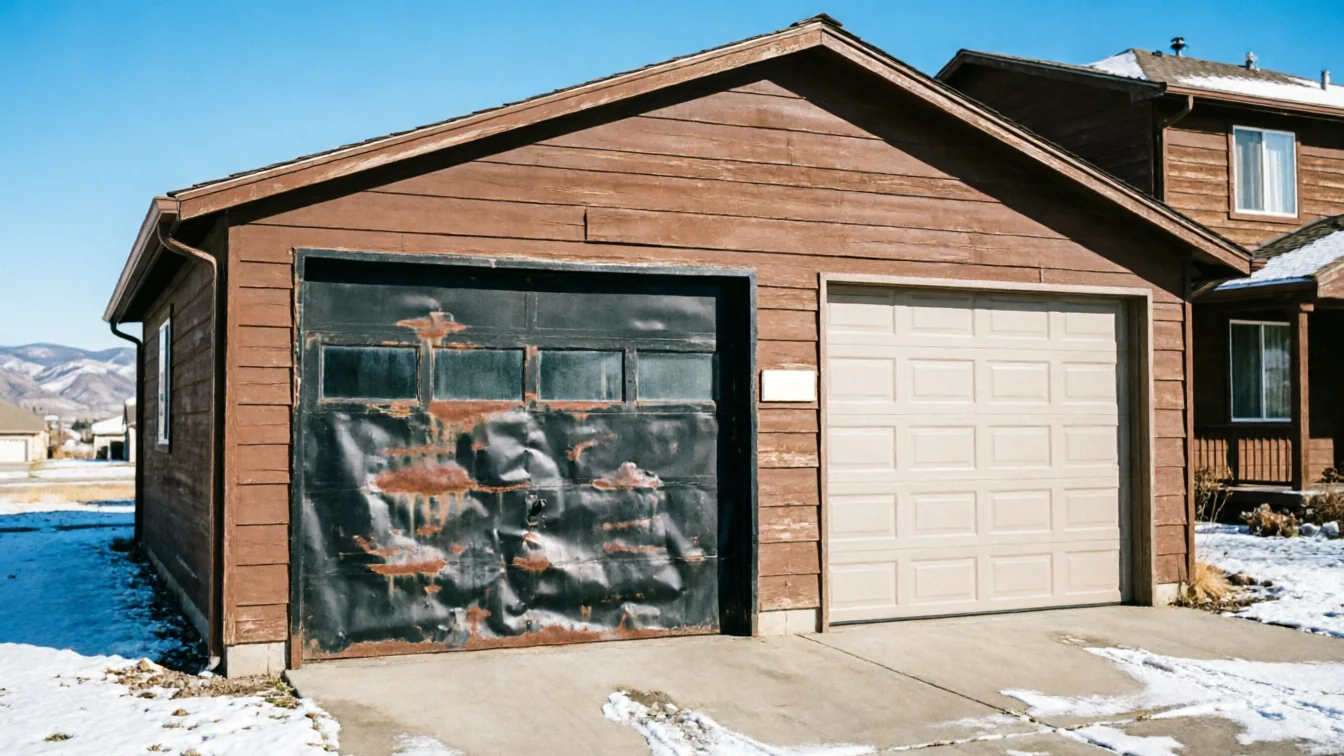
A snapped spring on an otherwise sound door is almost always worth fixing - the door itself, the track, and the panel steel on these older builds tend to outlast the spring by decades if the door was maintained at all. A door with a bowed or rusted-through bottom panel, bent track on both sides, and an opener from the same era is a different conversation. At that point you're not fixing one thing, you're chaining repairs on a door whose structure is already compromised.
One honest limit here: we can't always tell you over the phone which situation you're in. A door that sounds fine can have a track that's a quarter-inch out of plumb, and that only shows up in person.
What It Costs
We don't have a flat number to hand you here - job cost on an older door depends on what's actually wrong, and that varies enough between a worn spring and a bent track that a single figure would be a guess dressed up as a fact. What we can tell you is how to think about it.
Median household income across the Spokane Valley service area is around $78,841, and most owners we talk to are weighing a repair bill against either a full replacement or just living with the noise a while longer. A single spring or roller repair on a door that's structurally sound is almost always the cheaper and more sensible call. Once you're replacing the opener, the track, and patching panel rust in the same visit, you're closing in on what a new door costs installed, and at that point the door's age - 45, 50, 60 years old depending on when the house went up - starts to matter more than the repair itself.
Ask for the breakdown by part, not just a total. On a door this old, knowing whether you're paying for a spring or paying to keep patching a dying structure changes the decision.
Talk to a local pro
Garage door trouble in Spokane Valley?
Same-day service with honest, upfront quotes.