Doing Nothing For Now
Most of the houses this company works on went up between 1951 and 2008, with the bulk of that stock dating to the 1960s and 70s. That means a lot of original hardware is still hanging on tracks that were never designed to last this long, and a surprising number of owners wait until the door won't open at all before calling anyone.
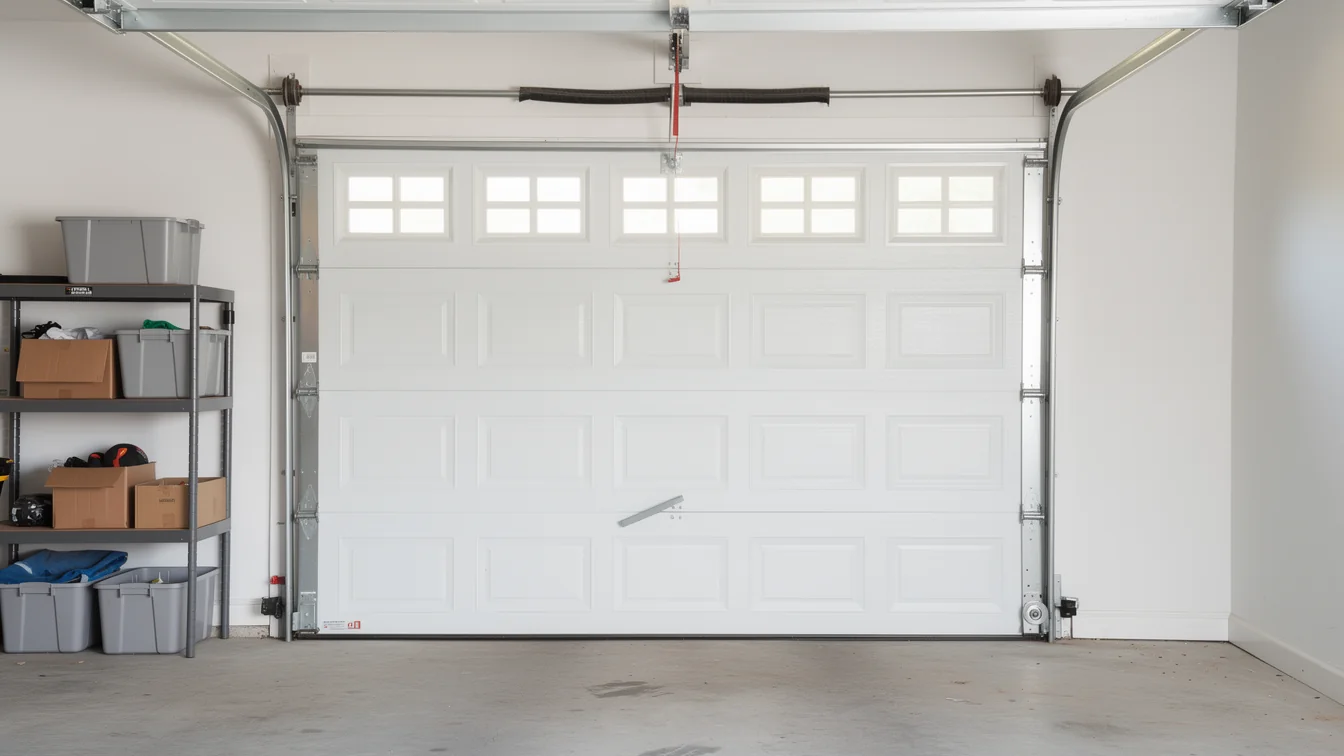
Waiting is sometimes fine. A squeak from a dry roller, a door that's a little slow in December, a remote with a weak battery - none of that needs a truck today. But a cable that's starting to fray, a spring with visible gaps between coils, or a door that drops suddenly partway down is a different category. Those don't get better on their own, and on a torsion system under tension, a failure can happen with enough force to hurt someone standing nearby.
The honest answer is that deferred maintenance on a 50-year-old door costs more than it would have cost at year 40, because by the time something finally breaks, it's usually taking a second part down with it - a bent track pulls the roller, a snapped cable throws the drum out of alignment. We'd rather get a call for the small thing.
What the Weather Here Does to It
The climate here is classified as severe cold, and that matters more for a garage door than people expect. Steel contracts in low temperatures, and a torsion spring that's been flexing fine since spring will tighten up and lose a little give right when the hard freeze hits - that's when a weak spring finally lets go, usually on the coldest morning of the stretch, not the mildest.
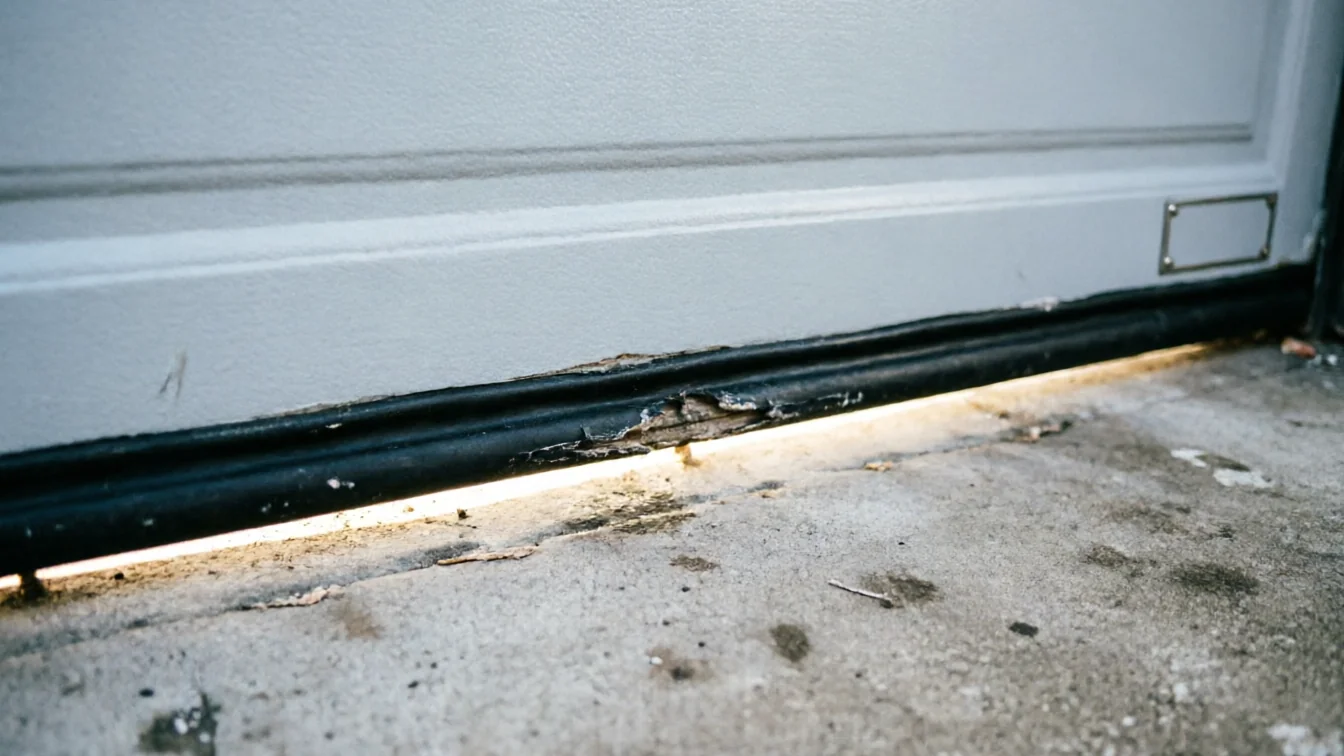
Lubricant on rollers and hinges thickens in the cold too, which is why a door that opened smoothly in September starts grinding in January. It's not a new problem, it's the same hardware working harder in conditions it wasn't greased for recently. Weatherstripping along the bottom panel also stiffens and can crack if it's already a few seasons old, which lets cold air and meltwater track under the door into the garage.
None of this is dramatic on its own. It's cumulative - a severe winter doesn't break a door, it finds the part that was already weak and finishes the job. That's the pattern we see every year once the temperature drops and stays down.
What Is Going On
The housing stock across this part of the valley mostly dates to the 1960s and 70s, spread across eleven distinct pockets that each got built out in roughly the same window. That consistency matters for garage doors specifically, because it means a lot of neighbors are running the same era of opener and the same style of one-piece or sectional door, often with the original torsion hardware never replaced.
The service area reaches out past the core of Spokane Valley to places like Veradale, two miles east-southeast, and Greenacres, three miles east - close enough that a truck can reach either one within the same window as a call closer in. Otis Orchards sits six miles out to the east-northeast, and Liberty Lake the same distance, both on the edge of how far a same-day call typically runs. Farther out, toward Mead, Town and Country, and Country Homes around ten miles, response is more of a scheduled visit than a same-day fix.
With roughly 10,366 owner-occupied houses across this service area, a lot of them built before modern weatherproofing and insulated door panels became standard, the insulation gap around an old door shows up every winter as a cold floor near the garage wall.
What It Costs
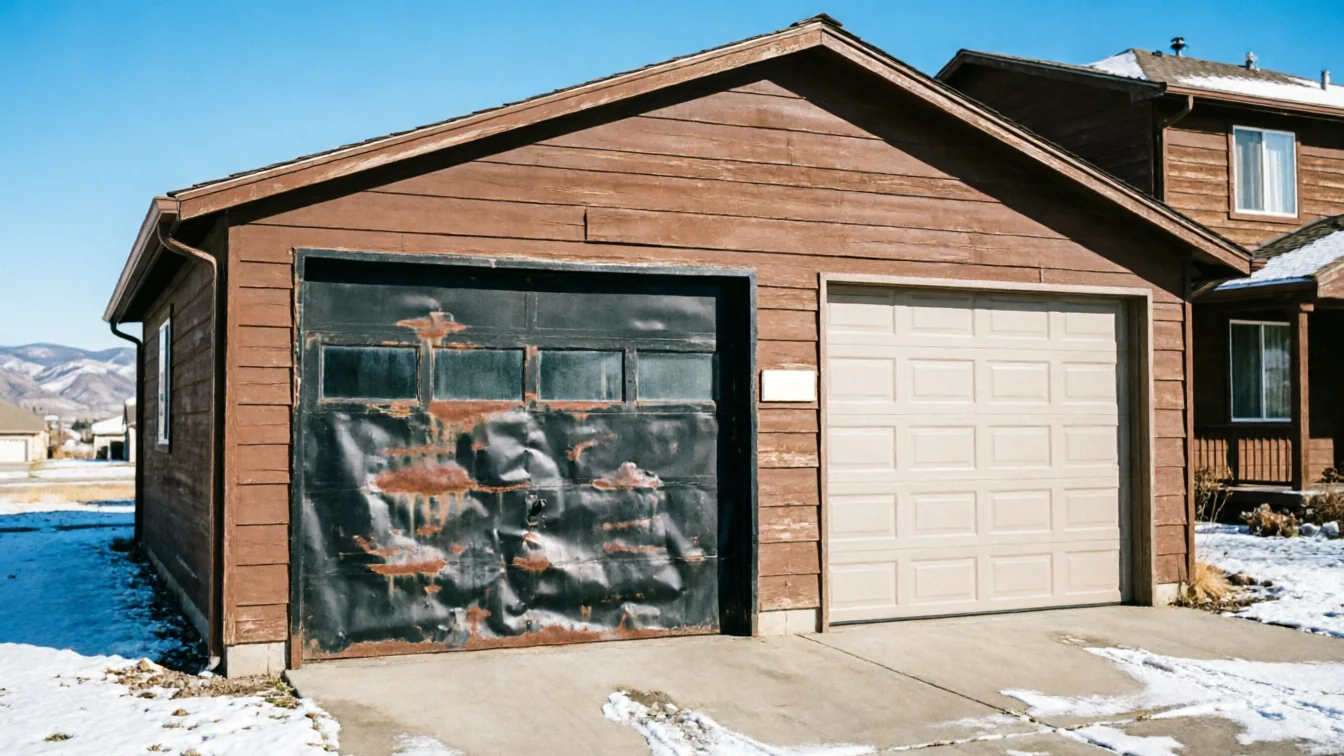
There's no single number that applies across a door built in 1960 and one built in 2005, so we won't pretend there is. What drives the cost on an older door is usually parts availability - a torsion spring sized for a door from the 1970s isn't always something a supplier keeps on the shelf, and matching an original panel color or profile on a door that's been discontinued for decades can turn a simple repair into a longer job.
Median household income across the service area runs around $78,841, which is part of why most owners here ask for a repair quote before agreeing to a full door replacement - repair is almost always the cheaper path if the track and opener are sound and it's just a spring or cable. Replacement starts making more financial sense once you're fixing the same door for the third time in a few years, or once the insulation value of an old uninsulated panel is costing more in heat loss than a new door would cost over time.
We'll tell you straight when a repair isn't worth it rather than stack parts onto an old door that's on its way out anyway. That's not always the answer homeowners want to hear, but it's the honest one.
Talk to a local pro
Garage door trouble in Spokane Valley?
Same-day service with honest, upfront quotes.