Doing Nothing For Now
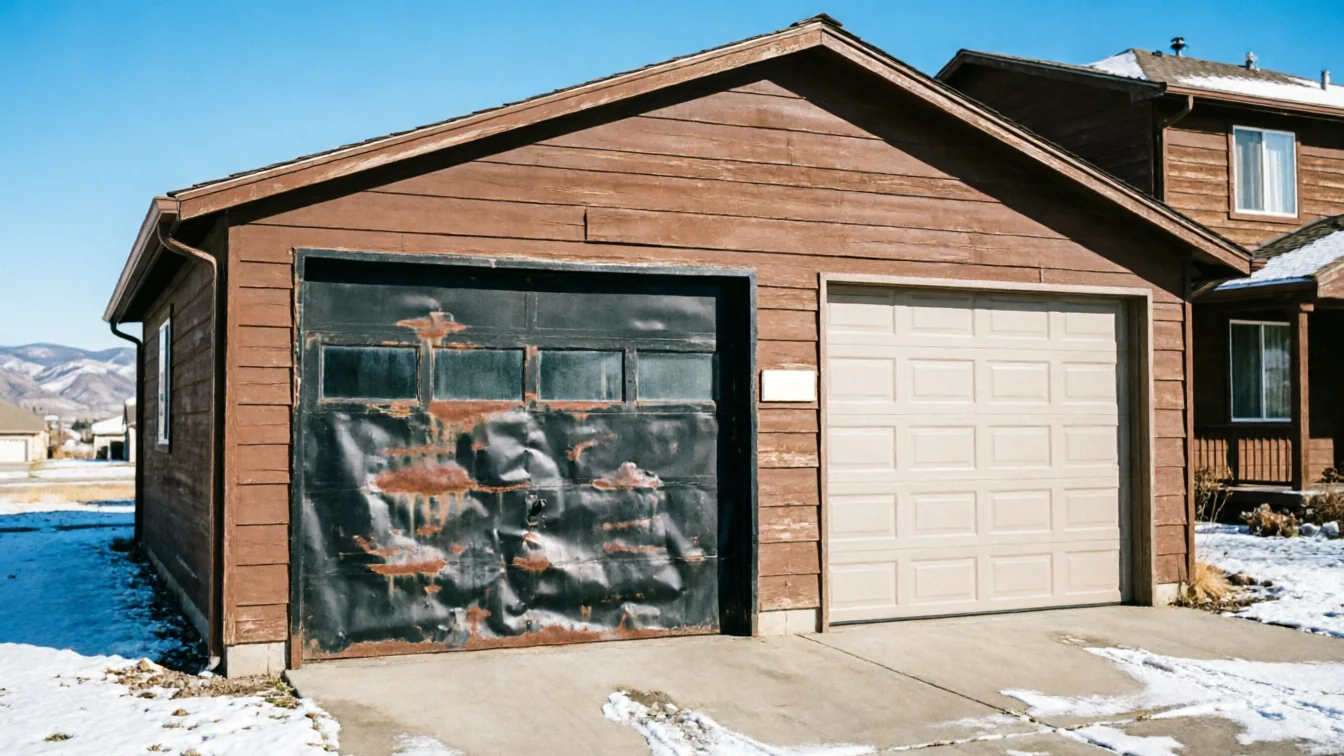
If your opener is acting up or you've had a power cut knock it offline, it's tempting to just park in the driveway until spring. For a lot of houses in this area - built anywhere from 1951 to 2008, with most of the stock dating to the 1960s and '70s - that's a gamble that doesn't always pay off. An opener that's struggling to lift a door in cold weather is usually telling you something about the spring tension, not just the motor. Ignore it long enough and the motor burns out trying to compensate, which turns a $150 fix into a $400 one. The one time doing nothing is fine: if the door still opens and closes smooth by hand with the opener disconnected, and you're just dealing with a dead remote battery or a tripped breaker after a power cut. That's a five-minute check, not a service call. But if the door binds, drags, or the opener grinds and reverses, that's spring or track trouble hiding behind a motor symptom, and cold makes it worse every week you wait.
What the Weather Here Does to It
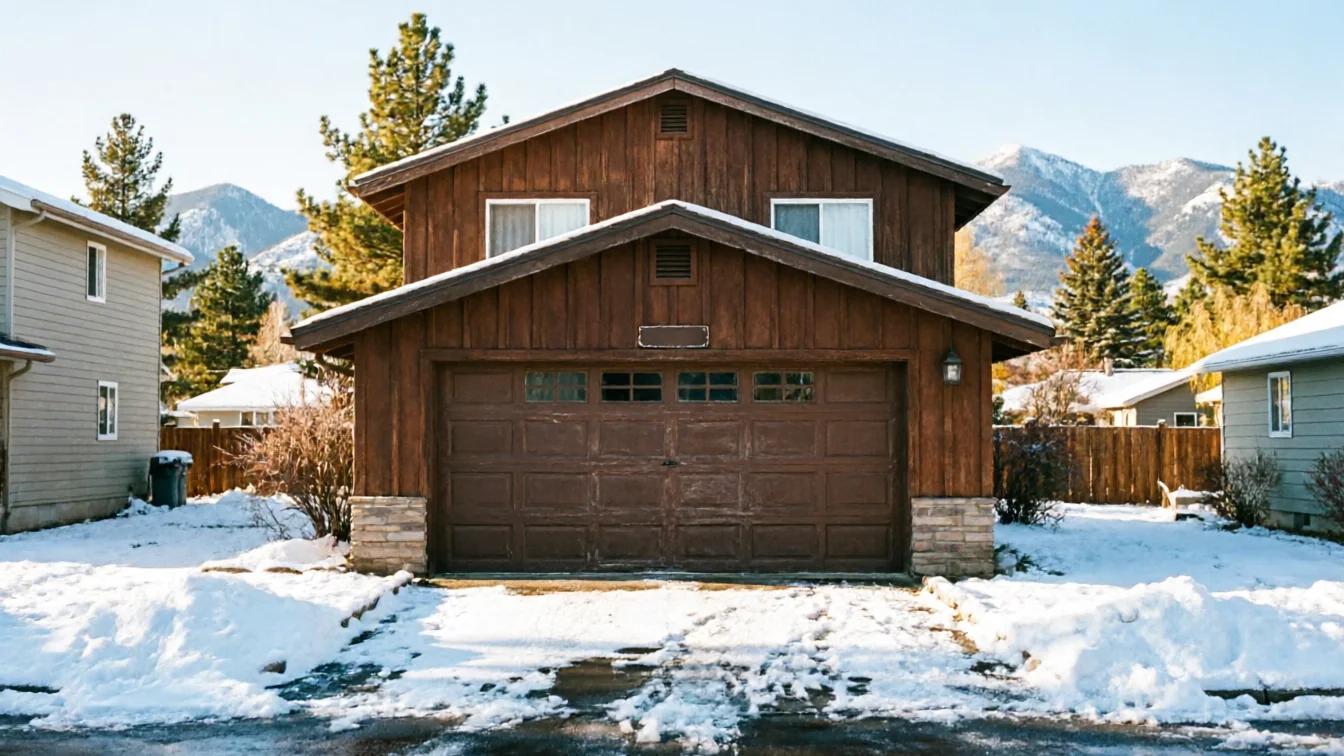
This area sits in a severe cold climate band, and that matters more for garage doors than people expect. Steel contracts in cold temperatures, which tightens tolerances on tracks and rollers that were already worn from age. Torsion springs lose a little tension as temperatures drop, so a door that was borderline in October can feel noticeably heavier in January - and an opener that was already working hard will trip its safety reversal more often, which reads to most owners as 'the opener is broken' when it's really the spring compensating for cold. Power cuts compound this. A cut that drops your opener mid-cycle on a cold night can leave a door half-open with a disengaged carriage, which is both a security problem and, in a severe cold stretch, a real heat-loss problem for the room behind it. If your opener has a battery backup, cold also shortens how long that backup holds charge, so a cut that would've been a non-issue in October can strand the door shut or open in January.
What Is Going On
Given the age range of homes out here - 1951 to 2008, with a median build year of 1978 - a lot of garage doors are running original or first-replacement hardware that was never designed around a modern opener's amp draw. When an opener strains and trips out repeatedly, especially after a power cut forces a hard restart, the usual suspects are: a torsion spring that's lost tension with age and cold, rollers original to a 1970s-era door that have gone stiff, or a logic board that didn't like the voltage spike when power came back on. Houses built closer to 2008 are more likely dealing with opener electronics than spring wear. Older stock, especially anything from the '60s and '70s mentioned for this area, is more often a hardware problem wearing an opener-shaped disguise. The honest limitation here: we can't diagnose a specific door over the phone with any confidence. Age and climate point us toward the usual causes, but spring tension and track wear vary door to door even on the same street, and a real diagnosis means someone standing in your garage with a hand on the door.
What It Costs
We don't have a flat number to quote here without seeing the door, and we're not going to make one up. What we can tell you is what drives the cost: a logic board or opener swap is a different job than a torsion spring replacement, and a spring job on an older, heavier door costs more in parts and time than the same job on a lighter modern door. Given that median household income in the service area runs around $78,841, most owners we talk to want the honest number before the truck rolls, not after. If your opener is tripping out after a power cut, that's usually a cheaper fix to diagnose than a door that's gone heavy from spring wear over a cold winter - but you won't know which one you've got until someone looks at the hardware, not just the motor.
Talk to a local pro
Garage door trouble in Spokane Valley?
Same-day service with honest, upfront quotes.